Voices from Chernobyl: When tech meets tribalism
- jonathanrussell72
- Oct 26, 2024
- 7 min read
Updated: Dec 1, 2024
Voices from Chernobyl (or Chernobyl Prayer) by Svetlana Alexievich is a morbid read. Marshall McLuhan once said, "We are re-entering the old tribal world, but this time we're going to go through ... the tribal dream wide awake." I was reminded of this idea when I re-read Voices From Chernobyl. The question as it relates to the book is: how lucid do you want to be for the nightmare?

I didn’t know who Svetlana Alexievich was until she won the Nobel Prize for Literature in 2015. I learned that she was a journalist who was from Ukraine-Belarus. That was pretty much it.
So I picked up Voices From Chernobyl, the only book of hers I found. I didn't even know what I was reading; I went in that blind.
The first lines I read were:
PROLOGUE
A SOLITARY HUMAN VOICE
[…]
I don’t know what I should talk about—about death or about love? Or are they the same? Which one should I talk about?
We were newlyweds…
The prologue is about 20 pages and details one of the most horrific deaths I've ever heard of, as well as its impact on the survivor. Within five pages I was blubbering for all humanity. And for the next 236 pages of the book, I was utterly hooked.
Alexievich is the only person to win the Nobel Prize for Literature for books based purely on interviews. In Chernobyl Prayer, you get voice after voice detailing the very specific horrors of the nuclear disaster. The interviewer is totally removed, no questions are asked, so what you get is even more immediate.

When I first read it, I thought it was a pure work of art. I was preoccupied by the documentary form I'd never seen in a book before, which now strikes me as being somewhat callous or removed and certainly besides the point. These are real people's real lives. Obviously, you hide behind big dusty words like art or intellect or whatever to protect yourself from what is actually painful. This is not an original thought, but it came into sharp focus here.
That was the difference main between first and second readings.
But in both cases, the book grabs you by the lapels.
Voices from Chernobyl: The power of the human voice
The book is essentially a collection of monologues created out of hundreds of edited interviews Alexievich conducted with the survivors, government officials, wives, liquidators, rescue workers, hunters—basically anyone who was directly (and sometimes not-so-directly) impacted by what happened the night of April 26, when the nuclear reactor exploded.
The creators of HBO’s mini-series Chernobyl said that the book provided inspiration for the very human moments of the show.
None of this is for the faint of heart. I feel like I need to add a disclaimer here because of the disturbing details.
That woman who I quoted earlier from "The Solitary Human Voice," Lyudmilla Ignatenko, detailed what happened to her husband, Vasily Ignatenko. “We still walked around holding hands, even if we were just going to the store,” she says on the first page. Vasya was one of the first firemen to respond to the fire at the reactor that first night. At the time, no one knew anything about the nightmarish effects of exposure to those levels of radiation.
As she tells her story, Lyudmilla's voice skips around between bewilderment and pleading, told in the plainest spoken language I’ve ever seen on a page. Its immediacy is painful. You sense she’s at her kitchen table telling you all this. She, like all the voices in the book, are not choosing their words; they’re just trying to get it out, as a way to understand themselves.
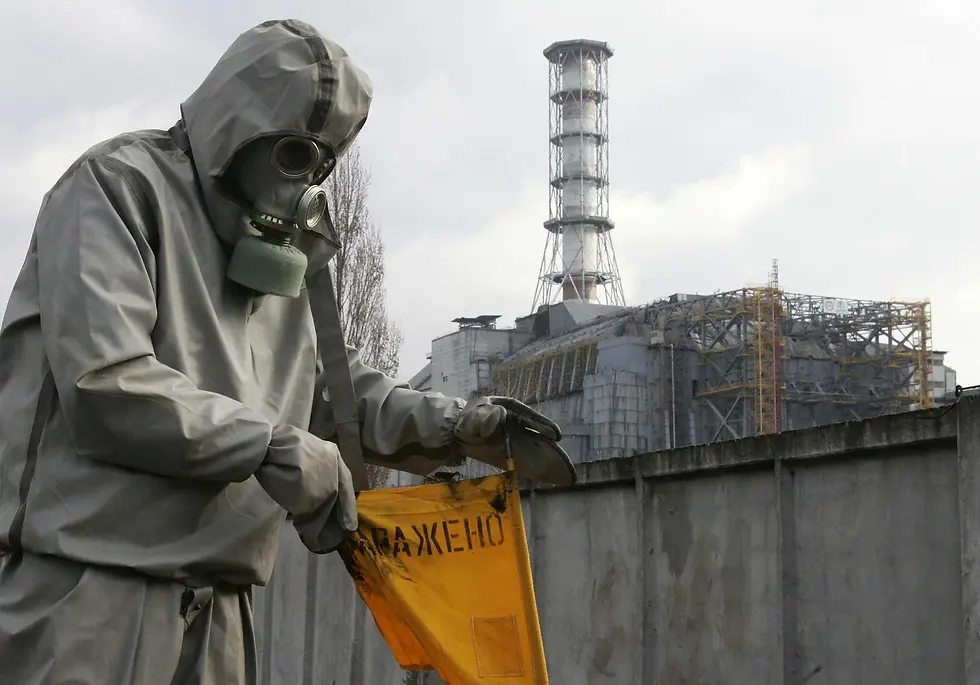
Lyudmilla ends up chasing Vasya to a hospital in Moscow, which he was taken to by the military. She’s only allowed into his room because she appeals to the good nature of the nursing staff, who go against their orders. The quarantined firemen die one by one, essentially losing weight, losing the shape of their bodies… A doctor finds out Lyudmilla is pregnant and scolds her because the men are radioactive. Vasya’s skin basically melts away in real-time. “Any little wrinkle [in the bedding] was already a wound on him…. I clipped my nails down till they bled so I wouldn’t accidentally cut him.”
Voices from Chernobyl: Pushkin met with cold, distant stares
I just realized that recounting any of these monologues like they’re narratives is kind of pointless, because the beauty of them, beyond the horror of what they're saying, is that they're formless.
But just to give you an idea, here is something like a cross-section of the monologues in the book. This will be a heightened version of reading the book, but worth getting a glimpse of, I think.
An early section is called "A Soldiers Chorus", which then lists a bunch of soldiers’ names, followed by unnamed monologues, ranging from half a page to a couple pages. Going to Chernobyl as a soldier was likened to going to war. Soviet-style heroism and all that. But when they returned to their homes, everything was contaminated with lethal doses of radiation. One section ends:
We came home. I took off all the clothes that I’d worn there and threw them down the trash chute. I gave my cap to my little son. He really wanted it. And he wore it all the time. Two years later they gave him the diagnosis: a tumor in his brain…. You can write the rest yourself. I don’t want to talk anymore.
In another monologue, a re-settler talks about how nature understood the Chernobyl explosion before the people, as evidenced by the bees her grandfather kept:
They didn’t come out for two days, not a single one. They just stayed in their nests. They were waiting. My grandfather didn’t know about the explosion, he was running all over the yard: what is this? What’s going on? Something’s happened to nature….The radio wasn’t playing anything, and the papers weren’t either, but the bees knew.
In "Three Monologues About A Homeland", a mother and daughter talk about fleeing the war in their homeland, Tajikistan. They fled to Chernobyl after it was evacuated, to squat in an abandoned house on the edge of a radioactive forest. Why?
Because no one’s going to chase us out of here. No one will kick us off this land. It’s not anyone’s land now. God took it back.

In one of the more morbid and heartbreaking monologues, a mother talks about her little girl, who was deformed as a result of exposure to radiation. The surgeries are endless and the facilities insufficient.
One professor said to us quietly: “With her pathologies, your child is of great interest to science. You should write to hospitals in other countries. They would be interested.” So I write…Take my girl, even if it’s to experiment. I don’t want her to die. I’m all right with her becoming a lab frog, a lab rabbit, just as long as she lives. [Cries.] I’ve written dozens of letters. Oh, God!
In "Three Monologues About A Single Bullet", hunters were hired to enter the radioactive zone, or simply the Zone, to kill the pets and animals thought to be carrying dangerous levels of radiation.
You had to shoot them point blank. One dog—he was a little black poodle. I still feel sorry for him…We’re dumping them from the dump truck into the hole, and this one little poodle is trying to climb back out. No one has any bullets left. There’s nothing to finish him with. Not a single bullet.

A teacher talks about the affects of Chernobyl on her school children, whether it be exposure to radiation or the endless graphic scenes of death and burial.
I read [Alexandre] Pushkin from memory and all I see are cold, distant stares. There’s a different world around them now…They’re always tired and sleepy. Their faces are pale and gray…You ask them to repeat something during a lesson, and the child can’t, it gets to the point where you simply ask him to repeat a sentence, and he can’t. You want to ask him, “Where are you? Where?”
A journalist recalls a conversation he had with a scientist once about the affects of the nuclear meltdown on the environment, on the earth:
“This is for thousands of years,” he explained. “The decomposition of uranium: that’s 238 half-lives. Translated into time: that’s a billion years. And for thorium: it’s 14 billion years.” Beyond that my consciousness couldn’t go. I couldn’t even understand anymore: what is time? Where am I?
Voices from Chernobyl: So what is the value here?
At first, Voices From Chernobyl felt like reading a documentary. But the longer you read, the more you start to see something else. The greatest technological failure in human history is met by campfire speech. In some cases, it led to people living feral lives off the grid in Chernobyl. You get glimpses into a hunter-gatherer state, where modern laws have completely broken down. The illusion that there is a society at all connecting all human endeavor is gone.

Hence the McLuhan quote: "We are re-entering the old tribal world, but this time we're going to go through ... the tribal dream wide awake."
You can almost take that literally.
This is a frightening proposition, as fodder for a book that you read in your cozy little life.
The book hits differently than the works of literary art of, say, Homer, Dante, Shakespeare, Dostoyevsky, Tolstoy, whomever. It hits much deeper because there is no real Aristotelian catharsis we can use to shield us from what human beings built that had such a profound implications.
I've thought a lot about this book from the different angle a re-reading provides, and I haven't arrived at any conclusions. If anything, I'm far more bewildered than the first time I read it.
I think Svetlana Alexievich is seriously brave.
There's also a part of me that thinks that, to further suppress tragedies like this in favour of comfort, to willfully look away, would be more monstrous than learning more about it. But I'm still like... I don't know what to do with this information, beyond feel immense pain.
Now if you'll excuse me, I'm going to further suppress tragedies like this....


